
A.W. Law LLC — Advocates & Solicitors
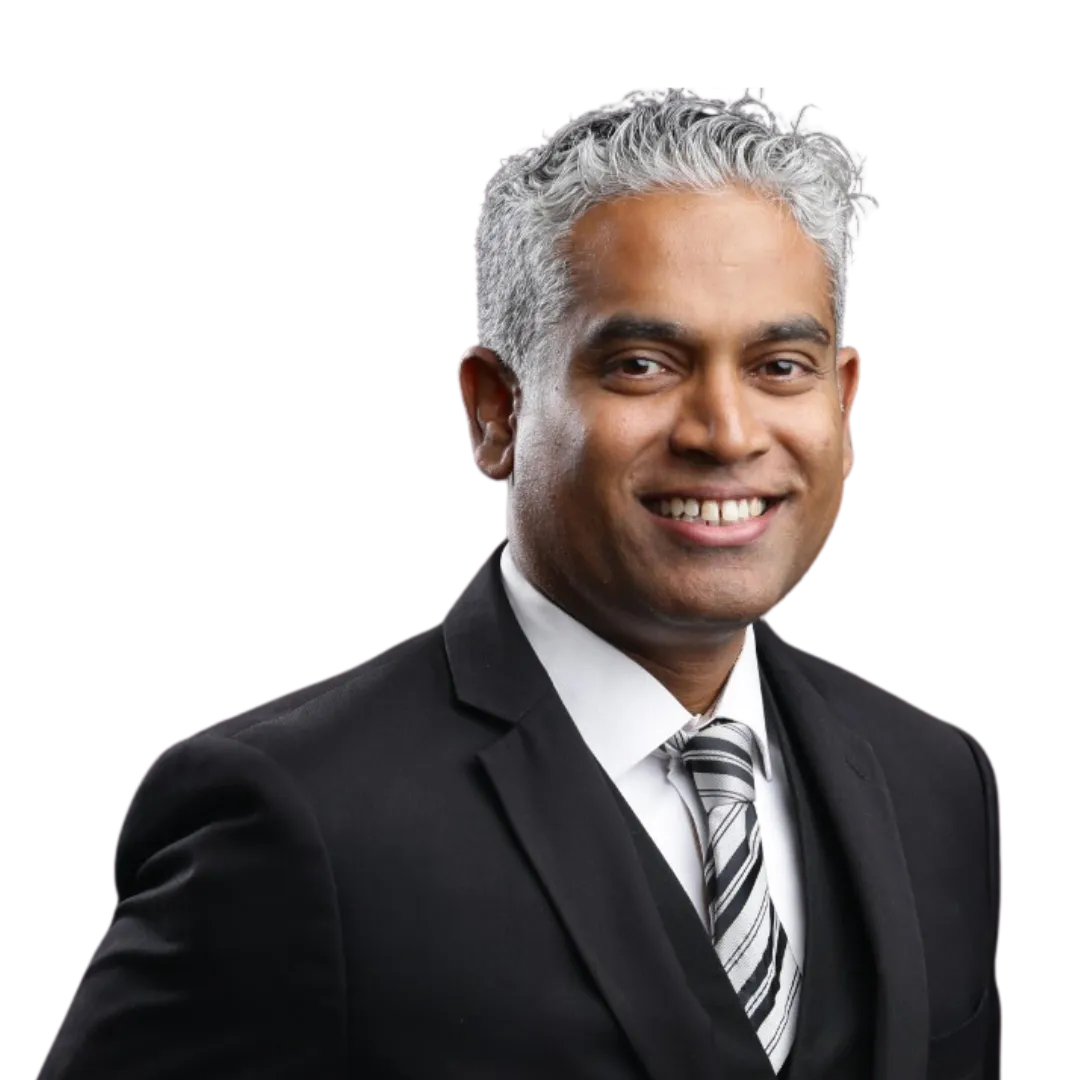
Roy Paul Mukkam, Associate Director at A.W. Law LLC

Handled by

Roy Paul Mukkam

Associate Director

DEBT RECOVERY LAWYER SINGAPORE

Debt Recovery Lawyer in Singapore

A Singapore debt recovery lawyer in Chinatown. Letters of demand, writs, bankruptcy. Free 10-min Debt Recovery Discovery Session. Fees in writing.

★ ★ ★ ★ ★ 4.8 on Google · 177+ reviews Law Society of Singapore English · Bahasa · 中文 · தமிழ் · Tiếng Việt

Or · weekdays, 9am – 10pm · Updated 24 April 2026

Timeline
2–3 weeks for a letter of demand · 3–9 months if court is needed
First meeting
Free · 10 minutes
Fees
Flat fee for letters and filings · hourly for contested work, capped in writing
Heard at
Small Claims Tribunals for debts under S$20,000 · State Courts for larger debts · High Court for debts over S$250,000
Governing law
Bankruptcy Act (now part of the Insolvency, Restructuring and Dissolution Act) · Limitation Act (6-year deadline)
Suitable for
Unpaid invoices, rental arrears, personal loans, contractor fees, commercial debts
Not for
Loan shark debts, debts over 6 years old, insolvent debtors with no assets
Languages we handle
English · Bahasa · 中文 · தமிழ் · Tiếng Việt
Translation staff on hand for each.

Someone owes you money, and you are tired of chasing

If you are reading this at 11pm on a Tuesday, you have probably been chasing the same debt for months. A client who went quiet after the invoice. A tenant three months in arrears. A friend who borrowed S$20,000 and stopped replying.

I’m Roy. I handle debt recovery at A.W. Law LLC in Chinatown. I have sat across from small business owners, landlords, and private individuals with exactly that tired look. In Singapore, the law gives you real tools to recover what you are owed. The trick is picking the right one for your situation, and using it early enough to matter.

The first 10 minutes are free, and nothing commits you.

What debt recovery in Singapore actually is

Debt recovery is the legal process of getting back money someone legally owes you. Unpaid invoice, rental arrears, personal loan, director’s guarantee, contractor’s fee. As long as the debt is real and provable, Singapore law lets you pursue it.

Unlike criminal matters, debt recovery is civil law. That means the police do not get involved (except in rare cases of fraud). You take the matter to court, you prove the debt, and the court orders the debtor to pay. If they still refuse, you enforce the judgment.

The main laws that matter:

  1. The Contracts Act (for proving the debt existed).
  2. The Limitation Act (the 6-year deadline).
  3. The Rules of Court 2021 (how civil claims are filed).
  4. The Insolvency, Restructuring and Dissolution Act (bankruptcy, winding up, the statutory demand process, and the S$15,000 threshold).

The venue depends on size:

  1. Small Claims Tribunals. For debts of S$20,000 or less (or up to S$30,000 if both sides agree in writing). No lawyer needed. Filing fees under S$100. Fast.
  2. Magistrate’s Court (part of the State Courts). For debts up to S$60,000.
  3. District Court (also State Courts). For debts between S$60,000 and S$250,000.
  4. High Court. For debts above S$250,000, or for bankruptcy and winding up applications.

Small Claims has a catch. It does not cover personal loans between friends. Only trade-type debts (goods sold, services rendered, rent arrears). For personal loans, even if it is only S$5,000, you have to file at the Magistrate’s Court.

Before I take a debt recovery matter, I ask four questions.

  • Is the debt provable? A signed contract is best, but WhatsApp messages, emails, invoices, and bank transfer records work too. If it was a verbal deal with no paper trail, your case is weaker.
  • Can the debtor actually pay? Winning a judgment you cannot enforce is a waste of money. We do basic checks. Does the debtor own property, run a business, have steady income? If they are truly broke, bankruptcy will not help you recover a cent.
  • Is the debt still within 6 years? Under the Limitation Act, you have 6 years from when the debt fell due. Wait too long and you lose the right to sue, even on a real debt.
  • Is the amount worth the cost? For debts under S$5,000, Small Claims Tribunals is cheap enough to make sense. For debts between S$20,000 and S$60,000, a civil suit usually is. For amounts in between, we work through the math with you at the first meeting. Sometimes the honest answer is: send one strong letter, and if that fails, walk away.

The three situations we see most often:

  • The debtor can pay but is stalling. A lawyer’s letter of demand usually solves this in 2 to 4 weeks. This is the cheapest recovery of all.
  • The debtor disputes the debt. We file at court, exchange documents, often settle at mediation. Takes 3 to 9 months.
  • The debtor is hiding or insolvent. Harder. We may need to trace assets, or issue a statutory demand to trigger bankruptcy or winding up. This is where experience matters.

If the debt involves a broken agreement rather than a straight unpaid invoice, a breach of contract claim may fit better. For commercial disputes over the terms themselves, see contract disputes.

What to expect, honestly

How long it takes.

A letter of demand resolves things in 2 to 3 weeks when it works. Small Claims Tribunals usually runs 6 to 10 weeks from filing to decision. A contested civil claim at the State Courts takes 6 months for a simple case, longer if the defence is strong. Enforcement (writs, garnishee, bankruptcy) adds another 2 to 6 months.

How much it costs.

Realistic Singapore fees for a straightforward matter:

  • Letter of demand: S$300 to S$600 flat.
  • Small Claims Tribunals filing: under S$100, no lawyer fee (you represent yourself).
  • Magistrate’s or District Court civil suit, uncontested: S$2,500 to S$6,000 all-in to judgment.
  • Contested civil trial: S$8,000 to S$25,000 or more, depending on complexity.
  • Bankruptcy or winding up application: S$3,500 to S$7,000 plus court fees.
  • Enforcement (writ of seizure and sale, garnishee order): S$1,500 to S$3,500 per action.

We quote a written fee cap before any paid work starts. For simple matters, we often agree a flat fee per stage. Some costs can be recovered from the debtor if you win, but the court usually awards only part of what you actually spent.

What is the hard part.

Two things. One, the emotional cost. Chasing a debt drags on, and dealing with a debtor who ignores you is draining. Two, the uncertainty. Even a strong case can hit a dead end if the debtor has no assets. We tell you upfront when that looks likely, so you can decide whether to press on or accept the loss.

For a walk-through of enforcement after judgment, see our guide on enforcing a court judgment in Singapore.

How we handle debt recovery at A.W. Law

A few things we do differently:

  • One lawyer, from letter to enforcement. Roy handles your matter end to end. No handover between associates.
  • Flat fees where possible. Letters of demand, filings, and standard enforcement steps are quoted at fixed prices, so you know the cost before you commit.
  • Honest cost vs. recovery read. If the math does not work, we say so at the first meeting. We do not push litigation that will cost you more than it recovers.
  • Letters you can actually read. Every court document we send for you is explained in simple terms first.
  • WhatsApp until 10pm on weekdays. Small business owners chasing debts do not finish work at 6pm. Neither do we.
  • English, Malay, or Tamil. Whichever you are comfortable in.

We are at 133 New Bridge Road, #20-03 Chinatown Point. Two minutes from Chinatown MRT, Exit E.

What happens next

If someone owes you money, the next step is simple. Book a free 10-min Debt Recovery Discovery Session using the form on this page, or WhatsApp us using the button anywhere on the screen.

Nothing commits you. By the end of the session, you will know which path fits (letter of demand, Small Claims, civil suit, or bankruptcy), a realistic fee estimate for each, and what the first 30 days will actually look like.

How we handle it

Your debt recovery, step by step.

  1. Step 01

    Book free 10-min Debt Recovery Discovery Session

    A short call or walk-in. You tell us who owes what, and how long. We tell you straight away whether a letter of demand, a writ of summons, or a statutory demand is the right first move.

  2. Step 02

    Letter of demand, priced flat

    For most cases, we start with a lawyer's letter of demand. It sets out the amount owed, the deadline (usually 14 days), and what happens next if the debtor ignores it. Flat fee, quoted in writing.

  3. Step 03

    Court filing if the debtor ignores the letter

    If the letter does not work, we file at the right court. Small Claims Tribunals for under S$20,000. State Courts for S$20,000 to S$250,000. High Court above that. We apply for default judgment if the debtor fails to respond.

  4. Step 04

    Enforcement: writs, garnishee, bankruptcy

    Winning in court is only half the job. If the debtor still will not pay, we enforce. Writ of seizure and sale on their assets, garnishee order on their bank account or salary, or a statutory demand leading to bankruptcy (for individuals) or winding up (for companies).

What to bring

For your first meeting.

Don't worry if you can't get everything — come anyway, and we'll tell you what's missing.

  • The signed contract, invoice, or IOU (any written record of the debt)
  • WhatsApp, email, or SMS messages discussing the debt
  • Bank transfer records showing what was paid or lent
  • NRIC or ACRA BizFile details of the debtor (individual or company)
  • Any letters or replies you have already sent the debtor
  • A timeline of when the debt became due and what has happened since

Your bench

Who handles your debt recovery

3 lawyers at A.W. Law LLC take debt recovery matters. The lead takes your first meeting.

Lead on this matter
Roy Paul Mukkam — Associate Director at A.W. Law LLC

Your lawyer on this matter

Roy Paul Mukkam

Associate Director

Roy was called to the Singapore Bar in 2013 and has over a decade of civil litigation and bankruptcy work behind him. He has represented banks, law firms, and individuals in recovery actions at the State Courts and the Supreme Court, including a reported High Court minority oppression dispute. He speaks English, Malay, and Malayalam.
Languages
English · Malay · Malayalam
Practice focus
Civil Litigation · Bankruptcy & Insolvency · Criminal Law
Qualifications
LL.B. (Hons), University of Warwick (2006) · Advocate & Solicitor, Singapore Bar (2013)
Read full biography
Abdul Wahab — Managing Director at A.W. Law LLC

Also on this matter

Wahab

Managing Director

Speaks
English · Malay · Tamil
Focus
Family Law (Civil & Syariah) · Civil Litigation
Muhammad Hasif — Associate Director at A.W. Law LLC

Also on this matter

Hasif

Associate Director

Speaks
English · Malay · Bahasa Indonesia
Focus
Family Law (Civil & Syariah) · Civil Litigation

Common questions

Debt Recovery — frequently asked.

How do I recover debt in Singapore?

Start with a friendly reminder. If that fails, send a letter of demand (a formal lawyer's letter setting out the amount owed and a deadline). If the debtor ignores it, you file a claim. For debts under S$20,000, the Small Claims Tribunals is cheap and fast. For larger debts, you file in the State Courts or High Court. If you win and the debtor still will not pay, you enforce. Writ of seizure and sale, garnishee order, or bankruptcy. We walk you through all of it in our full debt recovery guide.

How long does debt recovery take in Singapore?

A letter of demand can resolve things in 2 to 3 weeks if the debtor pays up. Small Claims Tribunals usually takes 6 to 10 weeks from filing to decision. A contested civil claim at the State Courts can take 6 months or more. Enforcement adds another 2 to 3 months for writs and garnishee, or 3 to 6 months for bankruptcy. Most debts that are going to be recovered get paid within the first 3 months.

How much does a debt recovery lawyer cost in Singapore?

A letter of demand from a lawyer usually costs a few hundred dollars as a flat fee. A Small Claims Tribunals matter you can file yourself, with filing fees under S$100. A civil suit at the State Courts runs S$2,500 to S$8,000 for a straightforward, uncontested case. A contested trial costs more. We quote a written cap before we start, and we will tell you upfront if your legal fees are likely to outweigh what you will recover. The 10-min Discovery Session is free.

What is a letter of demand in Singapore?

A letter of demand is a formal letter, usually from a lawyer, that tells the debtor exactly how much is owed, why it is owed, when it must be paid (usually within 7 to 14 days), and what will happen if they do not pay. It is not legally required, but many debts get settled at this stage because the debtor sees you are serious. Our blog post on 17 things you should know about debt recovery explains this in more detail.

What is the minimum amount for bankruptcy in Singapore?

The minimum is S$15,000. If an individual owes you at least S$15,000 and has failed to pay, we can issue a statutory demand (a formal demand under the Insolvency, Restructuring and Dissolution Act). If they do not pay or challenge it within 21 days, we can apply to the High Court to make them bankrupt. For companies, the same S$15,000 threshold applies, but the action is called winding up. Bankruptcy is serious, so we only recommend it when the debtor has the ability to pay but refuses.

Can I recover debt without a written contract?

Yes. The court accepts WhatsApp messages, emails, bank transfer records, invoices, and sometimes witness statements as proof. A written contract makes things easier, but it is not always required. What matters is showing that money was owed, that the debtor agreed to pay, and that they did not. Even a text saying 'I will pay you next week' can be strong evidence.

What is the time limit to sue for debt in Singapore?

Under the Limitation Act, you have 6 years from the date the debt became due to file a claim. After that, you lose your legal right to sue, even if the debt is real. So do not sit on it too long. If the debtor makes a fresh written acknowledgement of the debt, the 6-year clock can reset from that date.

Can I go to the police if someone owes me money?

Mostly no. Owing money is a civil matter, not a crime. The police will usually tell you to consult a lawyer or file a civil claim. But there are narrow exceptions. If the debtor lied to you on purpose to trick you into giving them money (criminal cheating under the Penal Code), or used forged documents, a police report may be appropriate alongside the civil claim. If someone is harassing you over a debt, that is a police matter too.

Related matters we handle

Still have questions?

Send a short message — Wahab reads it tonight and replies within one business day.

Your message reaches Wahab directly. We don't share it.

From our blog

Further reading on debt recovery

All blog posts →

What clients say

Verified Google reviews

Get in touch

Have a question? Start a conversation.

First consultations are free and obligation-free. We respond within one business day — usually faster.

Message us on WhatsApp

Replies weekdays until 10pm

Opens WhatsApp in a new tab with your message pre-filled.

Book your free 10-min Discovery Session

Wahab will read your details this evening and reply within one business day.

Free 10-min call · no commitment · your details stay private

Send us an email

We read every message and reply within one business day.

Replies in English, Malay, Tamil, or Vietnamese · your details stay private