
A.W. Law LLC — Advocates & Solicitors
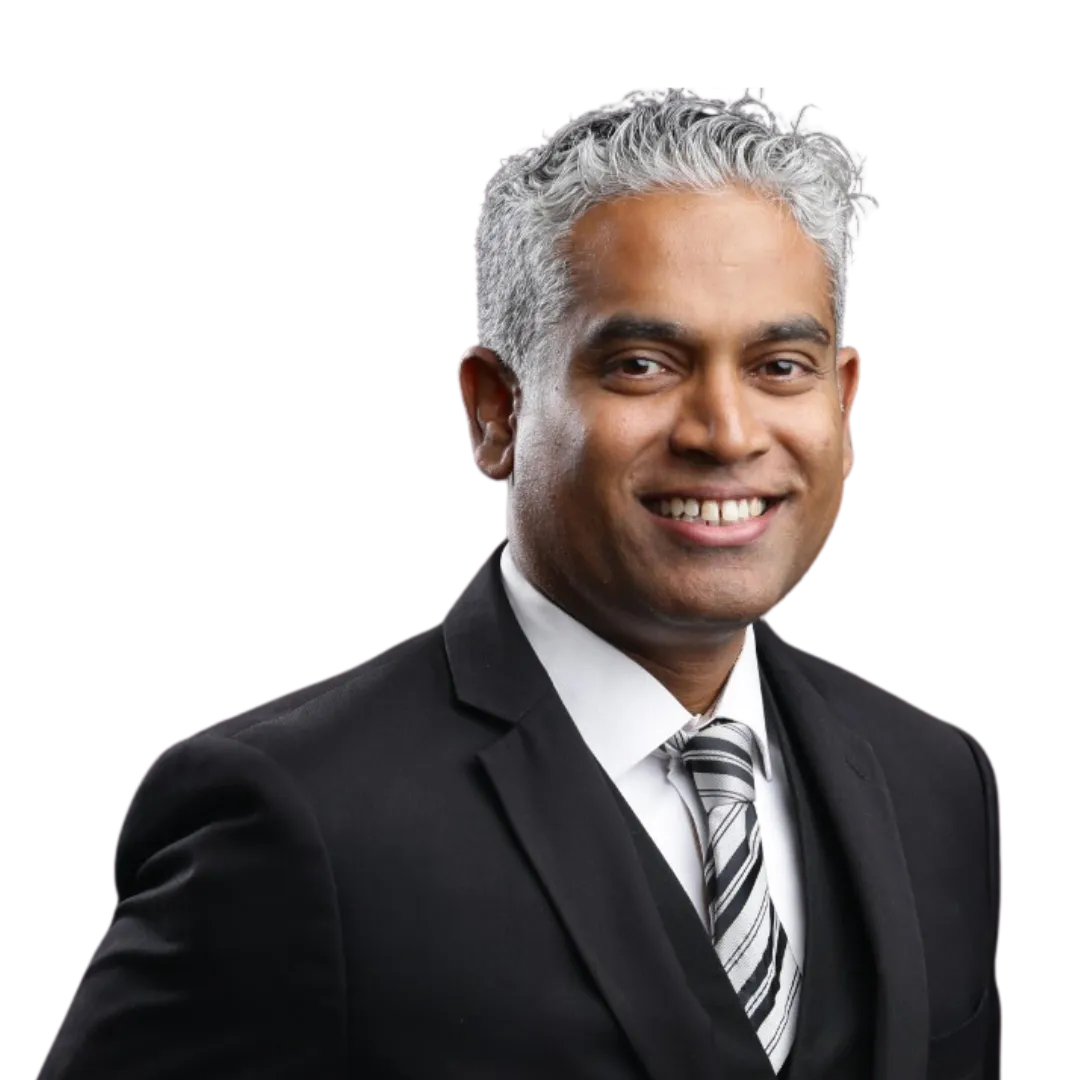
Abdul Wahab, Managing Director at A.W. Law LLC

Handled by

Wahab

Managing Director

INTERNATIONAL ARBITRATION LAWYER SINGAPORE

International Arbitration Lawyer in Singapore

International arbitration lawyer in Singapore. SIAC, ICC, cross-border enforcement under the New York Convention. DIFC Courts rights of audience. Free 10-min Discovery Session.

★ ★ ★ ★ ★ 4.8 on Google · 177+ reviews Law Society of Singapore English · Bahasa · 中文 · தமிழ் · Tiếng Việt

Or · weekdays, 9am – 10pm · Updated 29 April 2026

Timeline
6 months expedited · 9–18 months standard SIAC
First meeting
Free · 10 minutes
Fees
Capped hourly · 3 milestone tranches, in writing
Heard at
SIAC, ICC, HKIAC, LCIA, AIAC, CIETAC, or DIFC Courts
Governing law
International Arbitration Act, UNCITRAL Model Law, New York Convention
Suitable for
Cross-border commercial, shareholder, construction, supply, joint-venture disputes
Not for
Domestic ADR or family mediation. See Mediation and Arbitration.
Languages we handle
English · Bahasa · 中文 · தமிழ் · Tiếng Việt
Translation staff on hand for each.

If you’ve been served a Notice of Arbitration, or you’re reading the clause for the first time

If you’ve landed on this page late at night, it’s usually one of two reasons. You’ve just been served a Notice of Arbitration from SIAC or ICC and you’re trying to work out what’s binding and what isn’t. Or the contract you signed three years ago has gone wrong, and you’re trying to read the arbitration clause for the first time before you decide whether to sue, arbitrate, or settle.

I’m Wahab. I run A.W. Law LLC in Chinatown. I appear in arbitration proceedings at the Singapore International Arbitration Centre (SIAC) and hold full rights of audience at the Dubai International Financial Centre (DIFC) Courts, which matters when the dispute crosses jurisdictions.

The first 10 minutes of advice are free. Nothing commits you.

What international arbitration in Singapore actually is

International arbitration is a private process for resolving cross-border commercial disputes. Two or more parties (usually from different countries, or one Singapore party and one foreign party) agree to have their dispute decided by a tribunal of one or three arbitrators, instead of by a national court. The tribunal issues a binding arbitral award, enforceable in over 170 countries under the New York Convention (formally, the 1958 Convention on the Recognition and Enforcement of Foreign Arbitral Awards).

Singapore is one of the most-used arbitration seats in the world, alongside London, Paris, and Hong Kong. The reasons it gets chosen:

  1. The International Arbitration Act 1994 (IAA). Singapore-seated arbitrations run under the IAA, which imports the UNCITRAL Model Law. The Act is supportive: the High Court intervenes only to enforce an award or to hear a narrow set-aside application.
  2. The Singapore International Arbitration Centre (SIAC). The main institution for Asia-related commercial arbitration, with a published fee schedule, an Expedited Procedure for claims up to S$10 million, and an Emergency Arbitrator route for urgent interim relief.
  3. A pro-arbitration judiciary. Singapore courts will pause any court proceedings where a valid arbitration clause exists, and they enforce foreign awards routinely.

Other institutions you’ll see on Singapore-seated and Asia-region matters: the International Chamber of Commerce (ICC) in Paris, HKIAC in Hong Kong, LCIA in London, AIAC in Kuala Lumpur, and CIETAC in Mainland China. Which one applies depends on the wording of the contract clause and the seat the parties chose.

If your matter is a domestic civil dispute or a family mediation, see our mediation and arbitration page. For a contract that’s broken down without a clear arbitration clause, see contract disputes or breach of contract.

When international arbitration is the right route

International arbitration isn’t always better than going to court. Before we file at SIAC, I ask:

  • Does the contract have an arbitration clause, and is the seat clearly stated? “Arbitration in Singapore under SIAC Rules” is a clean clause. “Disputes settled by arbitration” with no seat or institution is the start of a preliminary fight before the real fight.
  • Where is the other side’s money? An award is only as useful as the place where you enforce it. If the respondent’s assets sit in a country that hasn’t signed the New York Convention, arbitration may not give you a usable result.
  • Is privacy worth the cost? Arbitration is confidential by default. Court hearings in Singapore are mostly public. For sensitive commercial information or a reputational dispute, that confidentiality has real value.
  • What’s the dispute size? Full SIAC arbitration isn’t economic for a S$50,000 claim. The Expedited Procedure helps, and so does mediation, but small disputes usually belong in court or in contract disputes territory.
  • Is there an urgent need for interim relief? Where assets risk dissipation or a counterparty is about to act, the Emergency Arbitrator can grant relief within 14 days, and the Singapore courts can grant freezing orders in support.

The two patterns we see most often are:

  1. Singapore-seated, foreign respondent. A Singapore company has a contract with a counterparty in Indonesia, Vietnam, India, or the Middle East, the clause says SIAC, and the deal has gone wrong. We act for either side.
  2. Foreign-seated award, Singapore enforcement. The arbitration runs in Hong Kong, London, or Paris, the award is issued there, and the winning party needs it enforced against assets held in Singapore.

Our blog on resolving business disputes without going to court covers the practical side of choosing arbitration over litigation.

What to expect from SIAC arbitration, honestly

How long it takes.

A standard SIAC arbitration runs 9 to 18 months from Notice of Arbitration to the final award. Smaller cases qualify for the Expedited Procedure and target an award within 6 months. The Emergency Arbitrator procedure can grant interim relief within 14 days of filing. ICC arbitrations typically run 12 to 24 months. Complex multi-party international matters can take over 2 years.

How much it costs.

Three layers, all separate. The institution fee (charged by SIAC, ICC, or the chosen institution) follows a published schedule tied to the sum in dispute. The tribunal fee (one or three arbitrators) scales with the same number: for a S$1 million claim, SIAC’s tribunal and institution fees together usually total S$45,000 to S$85,000, shared between the parties. The third layer is counsel fees, which we quote in writing as a capped engagement in three milestone tranches: (i) clause review and Notice of Arbitration, (ii) pleadings and document production, (iii) hearing and post-hearing. The 10-min Discovery Session is free, and no paid work begins until you’ve seen and accepted the estimate.

On the DIFC angle.

For UAE-Singapore commercial disputes, I hold full rights of audience at the Dubai International Financial Centre (DIFC) Courts, the English-language common-law court that sits inside the DIFC Free Zone in Dubai. That matters where a contract has a DIFC jurisdiction clause, where an arbitral award needs DIFC enforcement, or where a Singapore judgment needs to be registered against UAE assets through the DIFC’s “conduit jurisdiction” route.

What’s hard.

Three things tend to surprise first-time clients in international arbitration. Document production is heavier than in a Singapore court action, often run under the IBA Rules on the Taking of Evidence, and a sloppy production response can wreck a strong case. Witness statements are more tightly drafted than affidavits, and witnesses are usually cross-examined live at the merits hearing. Finally, an arbitral award is final on the merits: setting one aside under the IAA requires showing a procedural defect, not that the tribunal got the facts or the law wrong. Preparation has to be right the first time.

How we handle international arbitration at A.W. Law

  • One director, start to finish. The director who takes your Discovery Session runs the matter through to award.
  • Clause and seat review first. Before any filing, you get a written memo on the clause’s strengths, gaps, the proper seat, and the realistic strategy.
  • Honest route advice. If your matter belongs in a Singapore court, in mediation, or with foreign counsel as lead, we’ll say so before any work starts.
  • Capped fees, in writing, in three tranches. Notice of Arbitration; pleadings and document production; hearing and post-hearing.
  • Cross-border reach. SIAC, ICC, HKIAC, LCIA, AIAC, CIETAC, and DIFC Courts. We co-counsel with foreign firms where local admission is needed.
  • WhatsApp evenings until 10pm on weekdays.
  • Multilingual. English, Malay, or Tamil.

We’re at 133 New Bridge Road, #20-03 Chinatown Point. Two minutes from Chinatown MRT, Exit E.

What happens next

If you’ve been served a Notice of Arbitration, or you’re trying to read an arbitration clause before things escalate, the next step is simple. Book a free 10-min International Arbitration Discovery Session using the form on this page, or message us on WhatsApp using the button anywhere on the screen.

Nothing commits you. Most sessions end with a short list of things to gather: the contract, the clause, the correspondence, the rough numbers, and where the assets sit. You’ll leave knowing whether SIAC, ICC, another seat, or the Singapore courts is the right route, and what a realistic timeline and cost look like.


How we handle it

Your international arbitration, step by step.

  1. Step 01

    Book free 10-min International Arbitration Discovery Session

    A short call or walk-in. You tell us what the contract says, what's in dispute, and where the parties and their assets sit. We tell you straight away whether SIAC, ICC, another seat, or court is the right route. No charge, no pushing.

  2. Step 02

    Clause and seat review, in writing

    Before any paid work, we send you a short letter. It sets out the arbitration clause's strengths and gaps, the proper seat and governing law, the institution's fee schedule, and our own capped fee in three tranches. You decide.

  3. Step 03

    Notice of Arbitration and tribunal appointment

    We draft the Notice of Arbitration (or the Response if you're the respondent), agree the tribunal of one or three arbitrators, and file at SIAC, ICC, or the agreed institution. Where urgent interim relief is needed, we file under the Emergency Arbitrator procedure.

  4. Step 04

    Pleadings, document production, and hearing

    Statement of Claim, Statement of Defence, document production under the IBA Rules, witness statements, and the merits hearing. Most SIAC matters use a single hearing of 3 to 5 days. The tribunal then issues a binding arbitral award.

  5. Step 05

    Enforcement or set-aside

    An award is enforceable in over 170 countries under the New York Convention. We register and enforce it against the respondent's assets, or, if you're on the receiving end, advise on the narrow set-aside grounds under the International Arbitration Act.

What to bring

For your first meeting.

Don't worry if you can't get everything — come anyway, and we'll tell you what's missing.

  • The contract, the arbitration clause, and any side letters or amendments
  • Any Notice of Arbitration, Response, or institution correspondence already received
  • A short timeline of what happened, in your own words
  • Key emails, WhatsApp messages, and meeting notes between the parties
  • A list of jurisdictions where the other side has assets or operations
  • A rough figure: what you believe is owed, or what's being claimed against you

Your bench

Who handles your international arbitration

3 lawyers at A.W. Law LLC take international arbitration matters. The lead takes your first meeting.

Lead on this matter
Abdul Wahab — Managing Director at A.W. Law LLC

Your lawyer on this matter

Wahab

Managing Director

Wahab is Managing Director of A.W. Law LLC. He appears in arbitration proceedings at the **Singapore International Arbitration Centre (SIAC)** and holds full rights of audience at the **Dubai International Financial Centre (DIFC) Courts**, which matters for cross-border UAE-Singapore commercial disputes. He's been at the Singapore Bar since 2015 and takes every International Arbitration Discovery Session himself. He speaks English, Malay, and Tamil.
Languages
English · Malay · Tamil
Practice focus
Family Law (Civil & Syariah) · Civil Litigation · Bankruptcy & Insolvency
Qualifications
LL.B. (Hons), University of Leeds (2013) · Advocate & Solicitor, Singapore Bar (2015)
Read full biography
Muhammad Hasif — Associate Director at A.W. Law LLC

Also on this matter

Hasif

Associate Director

Hasif acts in commercial disputes at the High Court and Court of Appeal, including *Mface Pte Ltd v Chin Oi Ching* [2024] SGHC 234 and *Low Yin Ni & Anor v Tay Yuan Wei & Anor* [2020] SGCA 58. He prepares pleadings, witness statements, and document-production responses with close attention to the underlying contract. He speaks English, Malay, and Bahasa Indonesia.
Speaks
English · Malay · Bahasa Indonesia
Focus
Family Law (Civil & Syariah) · Civil Litigation
Roy Paul Mukkam — Associate Director at A.W. Law LLC

Also on this matter

Roy Paul Mukkam

Associate Director

Roy has been at the Singapore Bar since 2013 and has handled **ICC arbitration for a multinational**, alongside civil and criminal matters before the Court of Appeal. He's run High Court minority oppression disputes and represented The Law Society of Singapore. He speaks English, Malay, and Malayalam.
Speaks
English · Malay · Malayalam
Focus
Civil Litigation · Bankruptcy & Insolvency

Common questions

International Arbitration — frequently asked.

What is the difference between SIAC and ICC arbitration?

Both are leading arbitration institutions. SIAC (Singapore International Arbitration Centre) sits in Singapore and is the dominant choice for Asia-related commercial disputes. ICC (International Chamber of Commerce) is based in Paris and is the most-used institution for global cross-border arbitrations. SIAC tends to be faster and a little cheaper for Asia-seated matters, with a 6-month Expedited Procedure for claims up to S$10 million. ICC awards go through a court-of-arbitration scrutiny step that adds time but adds enforceability comfort. The right choice usually depends on what the contract clause says, where the parties are, and where assets are held.

How much does SIAC arbitration cost?

Three layers. SIAC's institution fee is on a published schedule based on the sum in dispute: for a S$1 million claim, the registration plus administration fees usually run S$15,000 to S$25,000. The tribunal fee (one or three arbitrators) for the same claim usually totals S$30,000 to S$60,000, also on a published schedule. Counsel fees are separate; we quote in writing, in three milestone tranches (clause review and Notice of Arbitration; pleadings and document production; hearing and post-hearing). The 10-min Discovery Session is free, and no paid work begins until you've seen and accepted the fee estimate.

How long does international arbitration take in Singapore?

A standard SIAC arbitration runs 9 to 18 months from Notice of Arbitration to final award. The Expedited Procedure (claims up to S$10 million or by agreement) targets an award within 6 months. The Emergency Arbitrator procedure can grant urgent interim relief within 14 days of filing. ICC arbitrations typically run 12 to 24 months. Complex multi-party investor-state and high-value commercial matters can take over 2 years.

Is an arbitral award enforceable in Singapore?

Yes. A Singapore-seated award is enforceable through the High Court under the International Arbitration Act 1994. A foreign-seated award (issued in Hong Kong, London, Paris, or any New York Convention state) is enforceable in Singapore by registering it under section 29 of the IAA. Singapore is one of the most arbitration-friendly jurisdictions in the world: enforcement is usually granted unless the respondent shows one of the narrow set-aside grounds in Article V of the New York Convention.

Can I appeal an arbitration award in Singapore?

No, not on the merits. Unlike a court judgment, you cannot re-argue an arbitral award by saying the tribunal got the facts or the law wrong. The only route is a set-aside application at the High Court under the International Arbitration Act, which is limited to procedural grounds: lack of jurisdiction, breach of natural justice, the tribunal exceeding its mandate, or the award conflicting with Singapore public policy. The threshold is high. This is why preparation has to be right the first time.

What is the New York Convention and how does it apply in Singapore?

The New York Convention (formally, the 1958 Convention on the Recognition and Enforcement of Foreign Arbitral Awards) is an international treaty signed by over 170 countries. It says that an arbitral award issued in one signatory country is enforceable in all the others, with very limited grounds for refusal. Singapore acceded in 1986 and the Convention is implemented through Part III of the International Arbitration Act. In practice, this means a Singapore award can be enforced against assets in Indonesia, Vietnam, India, the UAE, the EU, and most of the world without retrying the case.

Do I need a Singapore lawyer for SIAC arbitration?

Technically no, but in practice yes. SIAC has no admission monopoly; foreign counsel may appear. But the procedure relies on Singapore law and Singapore practice, especially for the supervisory court applications: anti-suit injunctions, freezing orders, jurisdictional challenges, set-aside, and enforcement. A Singapore counsel running the matter end-to-end usually saves money over routing every interlocutory step through foreign lawyers. We act as Singapore counsel both leading the case and supporting overseas firms running their first SIAC matter.

What happens if I ignore a Notice of Arbitration?

The arbitration goes ahead without you. Under SIAC and most institutional rules, if a respondent fails to file a Response, the tribunal can be appointed without your input, the case proceeds in your absence, and the tribunal can issue an award against you on the available evidence. That award is then enforceable internationally under the New York Convention. If you've just been served a Notice of Arbitration, the deadlines are usually short, often 14 to 30 days. Get advice quickly.

Related matters we handle

Still have questions?

Send a short message — Wahab reads it tonight and replies within one business day.

Your message reaches Wahab directly. We don't share it.

From our blog

Further reading on international arbitration

All blog posts →

What clients say

Verified Google reviews

Get in touch

Have a question? Start a conversation.

First consultations are free and obligation-free. We respond within one business day — usually faster.

Message us on WhatsApp

Replies weekdays until 10pm

Opens WhatsApp in a new tab with your message pre-filled.

Book your free 10-min Discovery Session

Wahab will read your details this evening and reply within one business day.

Free 10-min call · no commitment · your details stay private

Send us an email

We read every message and reply within one business day.

Replies in English, Malay, Tamil, or Vietnamese · your details stay private