

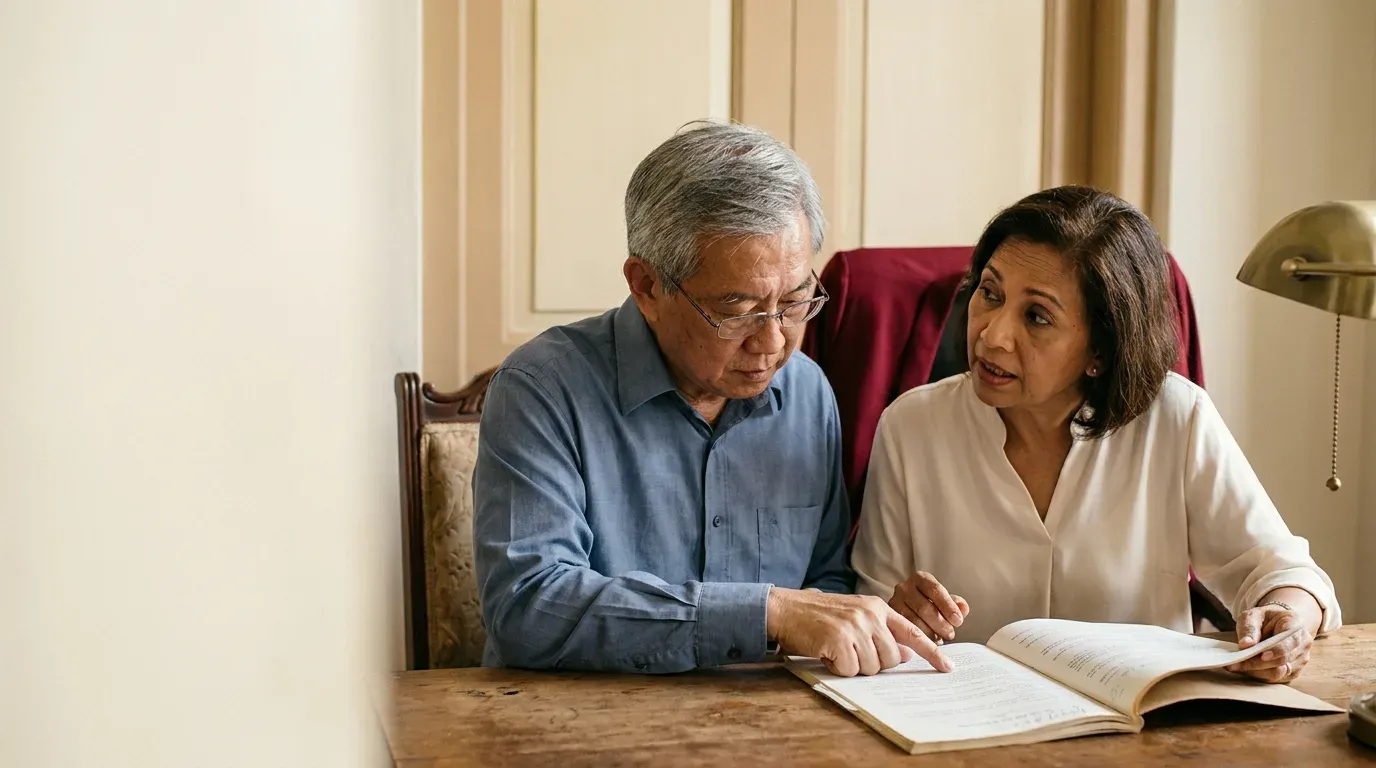
Most of the extra cost in a contested divorce does not come from the law. It comes from the messages. The 2am voice note. The email copied to three relatives. The WhatsApp reply that the other side prints out and puts into an affidavit. Communication during divorce Singapore clients underestimate is often the single biggest driver of how long, and how expensive, the whole thing becomes.
I am Wahab. I run a family practice at A.W. Law LLC in Chinatown, and by the time a matter reaches me, the couple has usually already said things on WhatsApp they wish they had not. This is a practical piece for the in-between period: after the decision, before the Final Judgment, when you and your spouse still have to coordinate school runs, mortgage payments, and what to tell the parents.
None of what I say below is legal advice for your specific case. It is the habits I wish every client brought with them on day one, because they make the proceedings under the Women’s Charter at the Family Justice Courts move more cleanly.
Why communication matters legally
The Women’s Charter section 95 requires you to show the marriage has broken down irretrievably by one of five facts. Two of those facts (unreasonable behaviour, adultery) turn heavily on the other side’s evidence of your conduct. Anything you write, say on a call, or post online can be produced as evidence in the form of an affidavit (a written sworn statement).
In my Singapore practice, I have seen:
- WhatsApp messages written in anger become exhibits in a Family Justice Courts custody application.
- Facebook posts about the spouse resurface in a cross-examination.
- Voice notes about “taking the kids and leaving” used as evidence of flight risk.
You do not have to pretend everything is fine. You do need to assume that anything you write could be read out in court. That shift in mindset changes how most people communicate within a week.
move everything to writing
If you are still living together, the in-person arguments will happen and they will not be evidence unless someone records them. The bigger risk is the long phone calls, the unrecorded promises, the “we agreed last Tuesday” fights where there is no record of what was actually agreed.
Move as much as possible to WhatsApp, SMS, or email. Short, factual, dated. “Picking up kids from school at 3pm Friday, dropping back Sunday 7pm.” “Paid July mortgage share, S$1,250, into joint account today.” That log becomes the paper trail that saves you in a maintenance dispute or a child custody argument six months later.
Written communication also slows people down. The worst things said during a divorce are almost always said out loud.
write like a judge will read
Before you send, reread. If a judge saw this message in an affidavit, how would it land?
Messages that read well in court tend to be:
- Short. Two to five lines. One topic per message.
- Factual. Times, dates, amounts, children’s names.
- Neutral in tone. No insults, no sarcasm, no threats, no caps.
- Focused on logistics. School, money, the flat, not relitigating the marriage.
Messages that read badly in court tend to be late at night, long, mixing multiple grievances, and containing at least one accusation. If you feel an urge to send one of those, write it into your notes app, save it, and come back in the morning. Nine times out of ten you will not send it.
The cost of divorce often tracks this habit directly. Contested matters where both sides have clean written records resolve faster than contested matters where the exchanges are messy.
use a single channel per topic
Pick one channel for children, one channel for money, and one channel for everything else. This sounds mechanical. It is, and that is the point.
A setup that works well for Singapore families:
- Children and logistics: a co-parenting app like OurFamilyWizard or TalkingParents, or a dedicated WhatsApp chat titled clearly.
- Finances and the flat: email.
- Lawyer contact: all substantive issues go through your lawyer, not direct to the other spouse.
When channels are separated, you can find the message you need without scrolling through three months of unrelated fights. Your lawyer can disclose the relevant channel in discovery without dumping your entire relationship history. And importantly, you are not mixing custody issues with money issues in the same thread, which blurs both.
avoid third-party escalation
The messages that do the most damage in my practice are the ones copied to the in-laws, posted to Facebook, or sent to mutual friends.
Two reasons to stop. First, your spouse will screenshot them and they will appear in an affidavit, framed as harassment or defamation. Second, the children will almost certainly hear about them. There is no such thing as a private WhatsApp group in a divorce.
If you need to vent, vent to a counsellor, a therapist, a close friend outside the family, or in writing to yourself. Not on social media. Not in a family group chat. Not to the mother-in-law you used to love. Save the real conversation for the people who will still be in your life in two years.
Our guide to managing the emotional side of divorce goes deeper on where to route those feelings productively.
protect the children in every message
This is the one I care about most. Anything you write about the divorce, about your spouse, or about the proceedings can be read by your children. Older kids do read their parent’s phones. Younger kids overhear the reactions.
Practical habits:
- Never discuss the case in messages a child could see.
- Never refer to the other parent in negative terms in any written channel.
- Keep handover messages purely logistical.
- Do not use the children as messengers (“tell your father he still owes me the July payment”).
The Singapore courts take parental alienation seriously. In my experience, messages that disparage the other parent, even private ones, can surface in a care-and-control dispute and weigh against the parent who sent them. We have separate guides for co-parenting after divorce for mothers and co-parenting after divorce for fathers that go deeper on this.
What to do next
If your matter has not been filed yet, the single most useful thing you can do this week is tidy up your channels. Separate the topics. Save important exchanges. Stop the 2am messages. That alone will make any subsequent filing cleaner and cheaper.
If the matter is already filed at the Singapore Family Justice Courts, talk to your lawyer about what channels to use and what to stop. In many cases a mediation session can reset the communication between spouses and save weeks of fighting.
If you are still at the deciding stage, or your spouse is pushing to file, the first ten minutes with me are free. Tell me the shape of your situation and I will give you an honest read on what the next step looks like, a realistic timeline (often four to twelve months uncontested), and a rough fee range (typically S$1,800 to S$3,500 for a simple uncontested matter, more if assets or children are complex). You can book a Divorce Discovery Session at any time.