

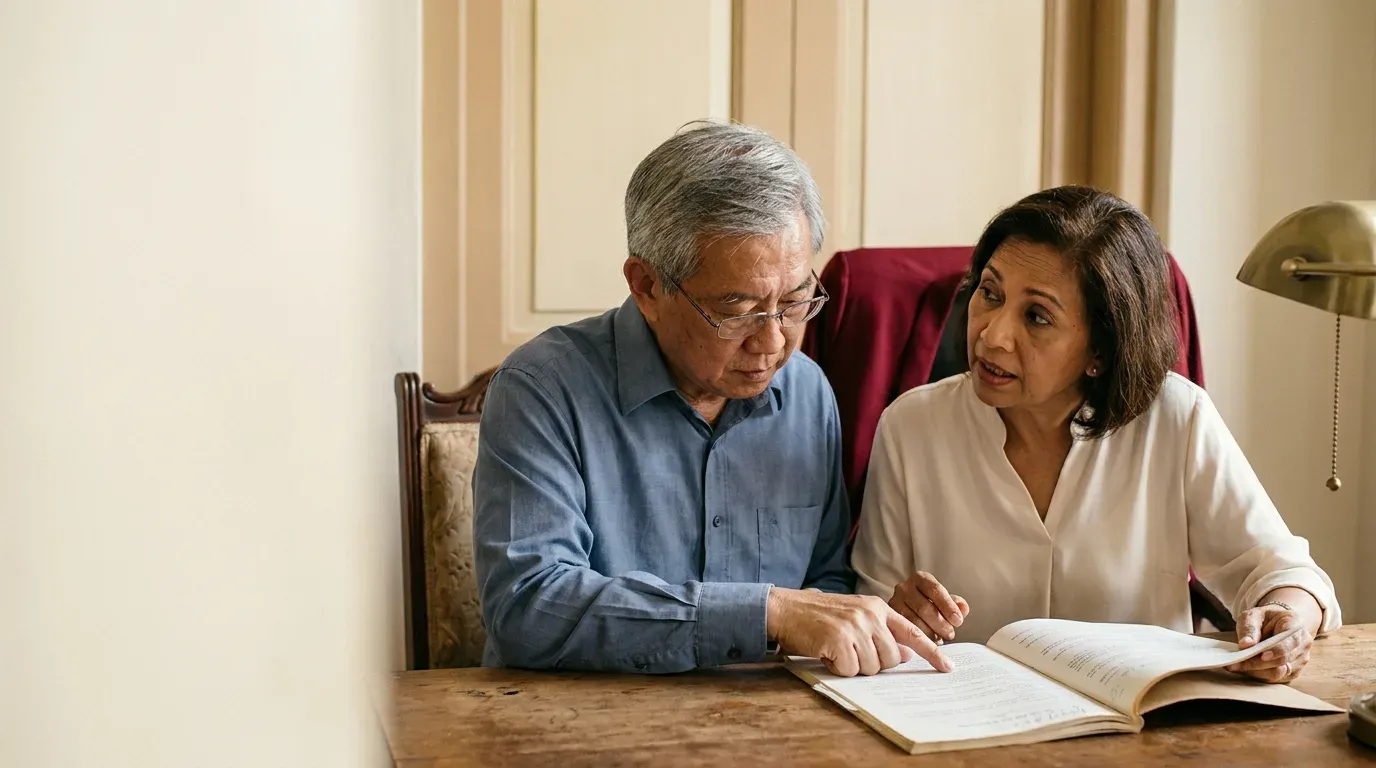
If you and your spouse are weighing whether to mediate in Singapore rather than run a contested hearing, the question that keeps coming up in my office is simple: what actually happens in the room? This post is a practitioner’s walk-through of the divorce mediation process in Singapore, written from the mediations I’ve sat through as counsel on one side of the table. I’m Wahab, and I practise family law at A.W. Law LLC in Chinatown.
If you want the quicker orientation piece covering mediation vs arbitration at a higher level, see our companion guide to the 5 things to know about divorce mediation in Singapore. This one is for readers who’ve already decided to try mediation and want to know how it runs.
What mediation actually is
Mediation is voluntary, neutral-facilitated settlement talks. A trained mediator sits between the two of you and helps you reach your own agreement. The mediator doesn’t decide anything. Compare that with arbitration (a binding decision by a neutral, like a private judge), and you’ll see why mediation suits couples who still trust each other enough to negotiate.
In Singapore, divorce mediation runs under two main tracks. The first is court-based mediation at the Family Justice Courts, usually at the Child Focused Resolution Centre (CFRC) when children are involved, or at general family mediation for financial issues. The second is private mediation, often at the Singapore Mediation Centre (SMC) or with a private counsel-led mediator. The enforceability and confidentiality of any settlement reached under either track is shaped by the Mediation Act 2017, which lets parties convert a mediated settlement into a court order.
Court-based mediation is also where the Women’s Charter’s duty of reconciliation bites. Section 50 of the Women’s Charter requires the court to consider whether the parties can be reconciled before the divorce is granted, and mediation is one of the vehicles the court uses to test that.
The steps inside the room
Most mediations I’ve conducted follow roughly this shape:
- Opening statements. The mediator explains the ground rules, including that anything said stays confidential and is without prejudice. You and your spouse each get a short chance to say what you want out of the day.
- Joint session. Both sides sit in the same room with their lawyers. The mediator surfaces the issues and tests where common ground already exists.
- Caucus. The mediator splits you into separate rooms and shuttles between. This is where most of the real movement happens. Your lawyer will reality-test your position in private and pass revised offers through the mediator.
- Drafting. If you land on terms, the mediator or lawyers draft a settlement note before the day ends. Walking out without writing it down is how agreements collapse overnight.
- Consent order. The settlement note is turned into a consent order, meaning the signed agreement is converted into a court order so it’s enforceable. Without that conversion, all you have is a contract, and enforcement is slower and messier.
Who mediation suits (and who it doesn’t)
Mediation works best when both of you still communicate without shouting, and when the dispute is more about quantum (how much, how the flat is split) than about whether the marriage ends. It struggles when there’s family violence, hidden assets, or a serious power imbalance.
If there’s a safety concern, a Personal Protection Order should be your first move, not mediation. If the dispute is really about whether you can divorce at all, see our overview of civil divorce. Mediation can’t un-ring bells that haven’t been rung.
What it costs in Singapore
Fees sit in a visible range. A half-day mediation at the Singapore Mediation Centre typically runs S$2,500 to S$6,000 in mediator fees, with costs split between the parties. Private counsel-led mediation runs higher, often S$3,000 to S$10,000 per side, once you add your own lawyer’s attendance and preparation time.
Court-based mediation at the FJC carries no separate mediator fee, because it’s part of your divorce proceedings. You still pay your own lawyer for attendance and preparation. Most of my clients reach settlement in one to two sessions once the financial disclosure is on the table.
If you qualify for Legal Aid Bureau assistance on means and merits, your mediator fees and lawyer costs are substantially subsidised. LAB eligibility applies to Singapore citizens and PRs meeting the income and asset thresholds, and the Bureau represents applicants in the Family Justice Courts including at mediation.
What to bring
The sessions that run smoothly are the ones with prepared files. Bring:
- Payslips, CPF statements, and bank statements for the last 12 months.
- HDB or property valuation and outstanding loan figures.
- A short list of what you need to rebuild a workable post-divorce life (housing, custody time, monthly cash flow).
- A list of what you’re willing to concede, ranked.
I tell clients to walk in with a number in their head for the three or four issues that matter most, and a softer range on everything else. Rigid positions stall mediations fast. Ranges keep movement alive.
One thing worth adding: bring a private note of the two or three concessions you absolutely won’t make. Knowing your own red lines before the day starts stops you from agreeing to something at 4pm that you’ll regret by 9pm. The mediator will press both sides to move; you should move, but not past the line you set before you walked in.
The mediator’s role and what they can’t do
The mediator is not your lawyer and not the judge. What the mediator can do is surface interests you haven’t articulated, translate positions into proposals, test reality checks in private caucus, and help both sides save face when one of you needs to climb down off a position. What the mediator can’t do is give either of you legal advice or decide the case.
That’s why your own lawyer sits next to you throughout. Your lawyer’s job at mediation is to reality-test your positions against what a contested hearing would likely produce, draft the settlement terms, and make sure you don’t sign something that contradicts the Women’s Charter or leaves something important unresolved. Mediators at the Family Justice Courts are usually sitting or retired judicial officers; private mediators at the Singapore Mediation Centre are senior accredited professionals, often with legal or social-work backgrounds.
When mediation breaks down
Mediation can fail, sometimes on day one, sometimes after three sessions. When it breaks down, the case moves to a contested hearing before a Family Justice Court judge, who will hear evidence and make orders on custody, monthly support, and the division of the matrimonial assets.
Because mediation is confidential under the Mediation Act 2017, the offers each side made during mediation cannot be thrown back in your face at trial. That confidentiality shield is one of the reasons mediation is worth attempting even in tough cases. A failed mediation doesn’t poison your litigation position, and often narrows the issues that actually need to go to the judge.
If children are involved, the Child Focused Resolution Centre will often keep a watching brief even after mediation fails, so the parental plan stays the focus rather than getting lost in the wider financial fight. More on the court-based route is in our post on types of mediation in Singapore.
What to do next
If you’re sitting on this decision at 10pm, the three useful things to hold in mind are: mediation is confidential and without prejudice; a mediated deal only becomes enforceable when it’s turned into a consent order; and fees sit in a knowable range before you walk in.
If you want a practitioner’s read on whether mediation fits your facts, the first ten minutes with me are free. Book a Discovery Session through our mediation and arbitration page and we’ll walk through what the room is likely to look like for your matter.